

BRICS Summit 2026: Modi puts startups, supply chains and green energy at the heart of a new global order

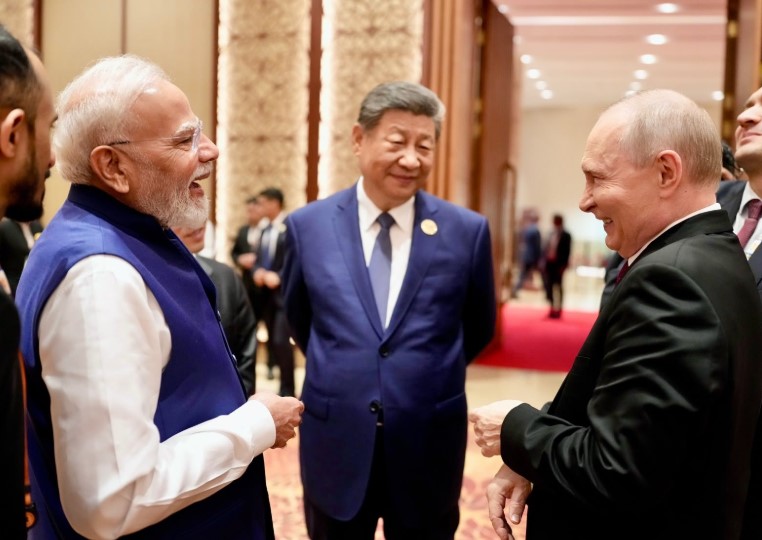
New Delhi is attempting to transform BRICS from a geopolitical talking shop into an economic and technological platform with real-world reach. At the 18th BRICS Summit, Narendra Modi placed resilient supply chains, startups, critical technologies, green energy and reform of global governance at the centre of India’s strategy — sending a clear message that the battle for influence in the emerging multipolar world will increasingly be fought through technology, trade and infrastructure.
The 18th BRICS Summit, held in New Delhi on September 12–13, 2026, was more than another gathering of leaders from the Global South. Under India’s presidency and the theme “Building for Resilience, Innovation, Cooperation and Sustainability,” New Delhi sought to redefine what the expanded grouping should actually do.
For Prime Minister Narendra Modi, the central question was no longer simply whether BRICS could challenge the political dominance of traditional Western institutions.
The bigger question was whether it could build an alternative ecosystem of economic cooperation capable of surviving geopolitical crises, trade wars, energy disruptions and fractured global supply chains.
And India came to the summit with proposals designed precisely for that purpose.
Modi’s message: the Global South wants a seat at the table
The summit opened with a closed-door session on “Inclusive Global Governance and Strengthening Multilateralism,” chaired by Modi.
His message was deliberately political.
The developing world, he argued, remains disproportionately exposed to global crises while remaining underrepresented in the institutions that make the most important international decisions.
Modi called for the Global South to move from being a “rule-taker” to a “rule-shaper,” while pushing for greater representation of emerging and developing economies within global institutions, including the United Nations system.
That phrase captures the broader Indian strategy.
New Delhi does not want BRICS to exist simply as an anti-Western coalition. It wants the grouping to become a vehicle through which emerging powers can demand influence without being forced into a rigid geopolitical camp.
This is particularly important for India, which simultaneously maintains deep relationships with Russia, competes strategically with China and expands economic and security ties with the United States, Europe, Japan and other Indo-Pacific partners.
BRICS therefore gives Modi something extremely valuable: strategic room to manoeuvre.
Startups become geopolitical weapons
One of the most significant developments in New Delhi received less international attention than the summit’s political statements.
BRICS is putting startups at the centre of its economic agenda.
The New Delhi Declaration welcomed the establishment of a BRICS Incubator Network, further consideration of a BRICS Startup Innovation Fund, and stronger cooperation through the BRICS Startup Knowledge Hub and Startup Forum.
This is not cosmetic diplomacy.
India understands that economic power in the coming decades will not be measured only in oil production, military expenditure or conventional manufacturing.
It will increasingly be measured in artificial intelligence, fintech, biotechnology, energy storage, advanced manufacturing, space technologies, cybersecurity and digital infrastructure.
Connecting startup ecosystems from India, China, Brazil, Russia, the UAE and other emerging economies could create an enormous technological marketplace.
For New Delhi, this also serves another objective: positioning India’s own startup ecosystem as one of the bridges connecting BRICS economies.
India wants capital, technology and talent to circulate through new channels — and it wants Indian companies positioned near the centre of those channels.
The supply-chain battle has arrived at BRICS
The summit also demonstrated how radically the global economic debate has changed.
Only a decade ago, the dominant language was globalisation and efficiency.
Today, the word is resilience.
Wars, sanctions, tariffs, shipping disruptions and geopolitical confrontation have exposed the vulnerability of international production networks.
BRICS leaders consequently backed efforts to build more resilient, reliable and stable supply chains, while the New Delhi Declaration endorsed further development of the BRICS Global Value Chain Action Plan 2026–2030 and welcomed a BRICS Logistics Supply-Chain Cooperation Framework.
This could become one of the summit’s most strategically important legacies.
Supply chains are no longer merely an economic issue. They are instruments of national security.
Semiconductors, rare-earth elements, critical minerals, energy infrastructure, pharmaceuticals and telecommunications equipment have all become parts of the geopolitical battlefield.
India’s ambition is therefore clear: BRICS economies should reduce their vulnerability to shocks originating outside the bloc while moving developing nations higher up the global manufacturing chain.
Critical minerals: the hidden battle beneath the green transition
There is also another dimension.
The transition toward cleaner energy requires enormous quantities of lithium, nickel, cobalt, copper, graphite and rare-earth elements.
Whoever controls their extraction, processing and supply networks will possess considerable influence over the industries of the future.
The New Delhi Declaration consequently called for reliable, diversified, resilient and sustainable supply chains for critical minerals, while stressing the rights of resource-rich countries to gain greater value from their own reserves.
That wording matters.
BRICS contains some of the world’s most important producers, consumers and processors of energy resources and strategic raw materials.
A more coordinated BRICS policy could therefore have consequences far beyond the organisation itself.
Green energy — but without abandoning energy security
India also pushed a carefully calibrated energy message.
BRICS endorsed cooperation in renewable energy, hydrogen, storage technologies and smart electricity grids, including work on smart-grid and energy-storage principles, photovoltaic cooperation and hydrogen value chains.
But the declaration avoided the ideological language often seen in Western climate debates.
It explicitly recognised that fossil fuels will continue to play a role in the energy mix of emerging economies, while supporting a “just, orderly, equitable and inclusive” transition.
That is classic Indian diplomacy.
New Delhi supports decarbonisation — but rejects a model that could force developing nations to sacrifice energy security and economic growth.
The message is straightforward: the green transition must not become another mechanism through which richer states dictate the development choices of poorer ones.
BRICS faces its biggest test: turning declarations into power
Yet behind the ambitious agenda lies an uncomfortable reality.
BRICS remains an extraordinarily diverse grouping.
India and China compete strategically. Iran and Gulf states carry different regional interests. Russia remains locked in confrontation with the West. Brazil, South Africa and Indonesia have their own priorities.
Reuters has repeatedly highlighted the difficulties the expanded bloc faces in maintaining consensus despite its growing geopolitical weight.
That makes New Delhi’s achievement significant.
Despite major geopolitical divisions, BRICS leaders adopted the New Delhi Declaration, with economic cooperation stretching across finance, technology, supply chains, energy, infrastructure, AI and development.
The question now is implementation.
India wants BRICS to deliver, not simply declare
This is where Modi’s strategy becomes clear.
India is trying to move BRICS away from endless debates about whether it is “anti-Western” and toward something potentially much more powerful: a network of institutions, businesses, payment mechanisms, innovation centres and supply chains capable of producing tangible economic benefits.
If that succeeds, BRICS will not need to formally declare itself an alternative world order.
It will gradually begin constructing pieces of one.
And that may ultimately be far more consequential.
The 2026 New Delhi Summit therefore represents a critical turning point. BRICS is attempting to move from symbolism to infrastructure, from declarations to startups, from geopolitical rhetoric to supply-chain power.
India wants to be one of the architects of that transformation.
For Narendra Modi, the objective is bigger than hosting another international summit.
It is about ensuring that, in the emerging multipolar system, India is not merely present when the new rules are written — it is one of the countries holding the pen.