


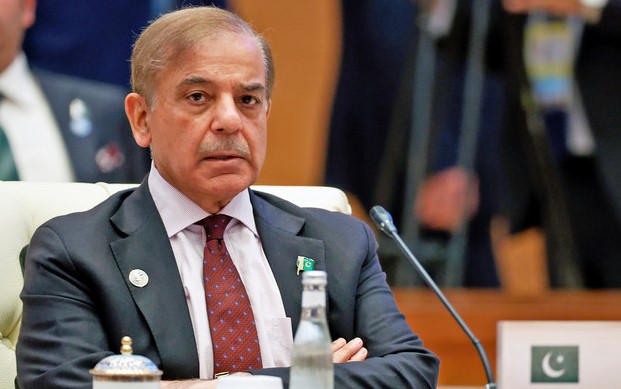
Over the past four years, the Pakistani government of Shehbaz Sharif has repeatedly highlighted one achievement above all others: economic stabilisation. Officials have argued that Pakistan was heading toward default and that difficult policy choices, backed by International Monetary Fund (IMF) programs, prevented a financial collapse. While this claim may be valid on its own terms, it raises a more important question: does avoiding default mean that the economy is actually improving for ordinary Pakistanis?
The distinction between economic stabilisation and economic growth is crucial. In Pakistan’s economic discourse, these terms are often used interchangeably, creating confusion among the public. Economic stabilisation simply means restoring short-term financial order, ensuring that the government can meet its obligations, repay its debts, and avoid default. Economic growth, by contrast, refers to rising productivity, expanding industries, higher incomes, job creation, and improved living standards.
A country can achieve stabilisation without achieving growth. Pakistan’s recent experience appears to illustrate exactly that.
The primary objective of Pakistan’s repeated IMF programs has not been economic transformation but rather the prevention of default. Default occurs when a government is unable to repay its creditors and effectively tells lenders that it cannot meet its obligations in full. Countries facing default lose investor confidence, suffer currency crises, and encounter severe economic disruptions. Pakistan’s successive stabilisation programs were therefore designed to keep the economy afloat, not necessarily to deliver prosperity.
This distinction matters because many Pakistanis hear the word “stability” and assume that economic conditions have improved. Yet stabilisation merely means the economy has stopped falling off a cliff. It does not automatically mean people are better off, businesses are expanding, or public services are improving.
The structure of government spending over the past four years reflects this reality. During this period, Pakistan’s total expenditure approached Rs 90 trillion. Of this amount, approximately 33 percent was spent on debt servicing, 28.2 percent was transferred to provinces under the NFC award, 9.1 percent went to defense, 7.4 percent to pensions, 10 percent covered losses of state-owned enterprises (SOEs), 3.4 percent went to energy subsidies, and 2.9 percent funded the Benazir Income Support Programme. Only around 4.6 percent was allocated through the Public Sector Development Programme (PSDP), the government’s primary development spending mechanism.
This implies that the overwhelming majority of public expenditure went toward maintaining the existing system rather than building future economic capacity. Most spending was consumed by routine operations, debt obligations, transfers, and subsidies. Very little was invested in infrastructure, human capital, or long-term development.
Development expenditure is particularly important because it determines whether a country expands its productive capacity. Growing populations require new schools, hospitals, roads, water systems, public transportation, and energy infrastructure. When only a small fraction of total spending is directed toward development, the state struggles not only to build new assets but even to maintain existing ones.
Pakistan’s development spending appears increasingly inadequate when compared with regional competitors. India, for example, allocates significantly more capital expenditure per person than Pakistan. The result is visible in differences in infrastructure development, industrial expansion, transportation networks, and public services. While Pakistan spends considerable resources simply sustaining current operations, its competitors invest far more aggressively in future growth.
The burden of debt is another major obstacle. Government debt reportedly increased from roughly Rs 47 trillion in 2022 to approximately Rs 83 trillion by 2026, representing a dramatic rise over four years. This debt expansion creates a vicious cycle. As borrowing increases, interest payments rise. Higher interest payments consume larger portions of government revenue, leaving fewer resources available for development.
If debt servicing consumes close to half of annual government revenues, fiscal flexibility becomes extremely limited. Instead of investing in roads, education, healthcare, or industrial development, the government must prioritise paying creditors. This pattern is sustainable only for a limited period before it begins to constrain economic growth.
The issue is compounded by the government’s heavy reliance on domestic borrowing. In a healthy economy, savings deposited in banks are channeled toward businesses that invest, expand production, and create jobs. In Pakistan, however, government borrowing increasingly absorbs available liquidity. This crowds out private-sector investment and reduces the flow of credit to entrepreneurs and productive enterprises.
State-owned enterprise losses represent another major drain on public finances. Over four years, these losses reportedly totaled around Rs 9 trillion. Many of these enterprises have suffered from inefficiency, political interference, and weak management for decades. Critics argue that successive governments have repeatedly promised restructuring or privatisation but have failed to implement meaningful reforms. As a result, taxpayers continue funding institutions that generate persistent losses instead of economic value.
Taxation policy presents a similar challenge. Pakistan’s Federal Board of Revenue significantly increased collections during this period, reportedly gathering around Rs 50 trillion in revenue. On the surface, this appears to be a success. However, critics argue that much of this revenue growth came through indirect taxation.
Indirect taxes on fuel, electricity, gas, consumer goods, and basic necessities affect rich and poor citizens alike. Unlike progressive taxes that place greater responsibility on higher-income groups, indirect taxes often place disproportionate burdens on ordinary households. Similarly, a growing reliance on withholding taxes and salary taxation has increased pressure on documented segments of the economy while the broader tax base remains relatively narrow.
Consequently, tax collection has risen, but economic incentives may have weakened. Higher taxation, rising energy costs, and elevated business expenses increase the cost of investment and production. While these measures help achieve short-term fiscal targets, they may simultaneously discourage long-term growth.
This is the central paradox of Pakistan’s recent economic management. Stabilisation has been achieved, but at a significant cost. Revenue collection has increased, default has been avoided, and macroeconomic indicators may appear less alarming than before. Yet debt has expanded, development spending remains low, state-owned enterprises continue generating losses, and taxpayers face heavier burdens.
Avoiding default and achieving prosperity are not the same thing. Economic stabilisation can prevent collapse, but it cannot by itself generate growth. Growth requires productive investment, infrastructure development, institutional reform, efficient public spending, competitive industries, and rising private-sector activity.
Until Pakistan moves beyond crisis management and begins prioritising long-term development, stabilisation will remain a temporary measure to prevent economic collapse, not a pathway to widespread prosperity. For ordinary Pakistanis, the real test is not whether the country avoided default, but whether their incomes, opportunities, and quality of life are improving. On that measure, the debate remains far from settled.
_________________________________________________________