


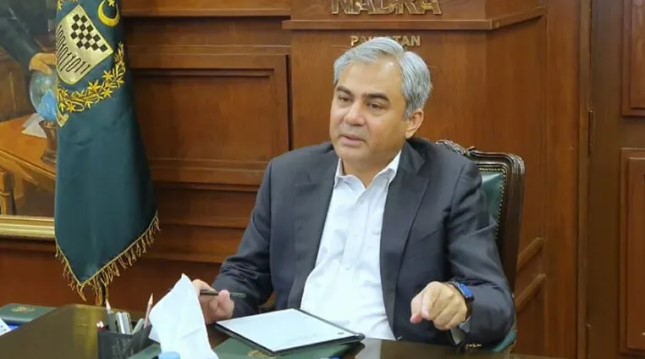
The debate over Pakistan’s territorial reconfiguration has returned with renewed intensity, and once again Sindh has become the lightning rod of contention. Interior minister Mohsin Naqvi’s lament about the collapse of Pakistan’s “outdated governance system” has reignited calls for new provinces, with advocates insisting that smaller administrative units would bring government closer to the people. Yet beneath the rhetoric lies a deeper question: does carving up provinces actually decentralize power, or does it merely replicate the same centralized structures in new locations?
Every few years, proposals to divide Punjab or split Sindh resurface, framed as solutions to unwieldy governance. But the central flaw remains: multiplying provinces does not automatically translate into proximity between citizens and decision-makers. If Islamabad were to create ten or twelve provinces tomorrow, the likely outcome would be more governors, more assemblies, more secretariats, another layer of bureaucracy stamping files. The seat of power would shift geographically, but the culture of centralized control would remain intact. What emerges is not genuine decentralization, but what might be called “decentralized centralization”, a paradox that exposes the hollowness of the exercise.
The persistence of Pakistan’s CSS-dominated administrative culture underscores this point. The entrenched bureaucracy would be franchised, not dismantled. Adding intermediate governments does not dilute centralized authority, it merely changes its address. True decentralization requires constitutional clarity about what belongs irrevocably to the local level: elections, staffing, land use, planning, regulation, and fiscal autonomy. Without such guarantees, new provinces are cosmetic reforms that leave the underlying system untouched.
The costs of such restructuring are not trivial. Each new province demands a governor, cabinet, secretariat, police command, and administrative machinery, resources that could otherwise fund schools, hospitals, or infrastructure. Worse, it creates fresh avenues for patronage, diverting scarce resources into political bargaining rather than public service. The electoral system compounds the dysfunction. Metropolitan economies require leadership accountable to entire cities, yet Pakistan’s patchwork of wards incentivizes representatives to maximize benefits for their own neighborhoods. The result is incoherence in transit planning, housing, and economic strategy, a fragmentation that mirrors the failures of provincial governance itself.
Constitutionally, the hurdles are formidable. Article 239 (4) stipulates that altering provincial boundaries requires approval from two-thirds of the provincial assembly, the National Assembly, and the Senate. In Pakistan’s polarized political landscape, such consensus is nearly impossible. Proponents have floated the idea of referendums to secure popular consent, but Pakistan’s history of referendums under Ayub, Zia, and Musharraf, marred by manipulation and rigging, offers little reassurance. The specter of illegitimacy looms large.
Sindh exemplifies the dangers of forced reconfiguration. The proposed division has galvanized nationalist parties, triggered street mobilization, and provoked resolutions in the Sindh Assembly. The most catastrophic scenario involves population transfers reminiscent of 1947. Concentrated in urban centers, Muhajirs might migrate to a newly created Muhajir-majority province, sparking cross-migration across boundaries steeped in historical trauma. Such upheaval would unleash a storm of discontent across Sindhi society, destabilizing ethnic relations and deepening fissures. The state, already fragile, is ill-prepared to manage such convulsions.
At its core, the provinces’ debate is not about governance but about resources, who controls them and who benefits. Since July 2023, Pakistan has been trapped in a grueling economic stabilisation program that has strangled growth and burdened citizens, all in the name of rebuilding fiscal and foreign exchange buffers. Those buffers remain depleted. In this context, steamrolling provincial restructuring against popular will risks exacerbating identity-driven politics across a multiethnic landscape.
It could ignite the tinderbox of discontent among youth already scarred by poverty, unemployment, and systemic failure. The statistics are stark: half the population lives below the poverty line, 28 million children are out of school, four in ten suffer stunted growth, three-fourths consume contaminated water, and investors, domestic and foreign, are deterred by insecurity. Against this backdrop, the pursuit of new provinces appears not only misguided but dangerous.
What Pakistan desperately needs are softer options, justice, equity, peace, opportunity, and development. These are democracy’s tested tools for healing societal wounds. The yawning fault lines, ethnic, social, political, inter-provincial, and center-province, must be mended through federal democracy, not fractured further by territorial experiments. The hybrid regime that has buried representative governance must give way to institutions that are efficient, accountable, and rules-based. Legitimate leadership must be allowed to emerge through fair, free, and timely elections, replacing dead wood with fresher, cleaner representatives at every level. This is the reset Pakistan requires, not a redrawn map, but a reformed system.
The provinces’ debate ultimately misses the point. It is an argument about slicing up public spending, inevitably circling back to the National Finance Commission and its transfers. But wealth is not created by government spending; it is generated when private individuals invest, innovate, and build under conducive conditions. Cities, not provinces, are the engines of growth. They thrive because they foster interaction among people, firms, and ideas.
Thus, the real question Pakistan must confront is not how many provinces it needs, but where decisions ought to be made and how much autonomy its cities should enjoy. Development does not occur where governments allocate funds; it flourishes where citizens are free to act, collaborate, and innovate.
Redrawing boundaries may alter the map, but without systemic reform it will not alter the politics of centralization. Pakistan’s challenge is to decentralize meaningfully, empowering local governments, strengthening institutions, and restoring democracy, so that governance serves people rather than perpetuating bureaucratic patronage.