

Norwegian Research Vessel Denied Entry Amid Ongoing Moratorium: SL Government Cites Need for Strategic Framework

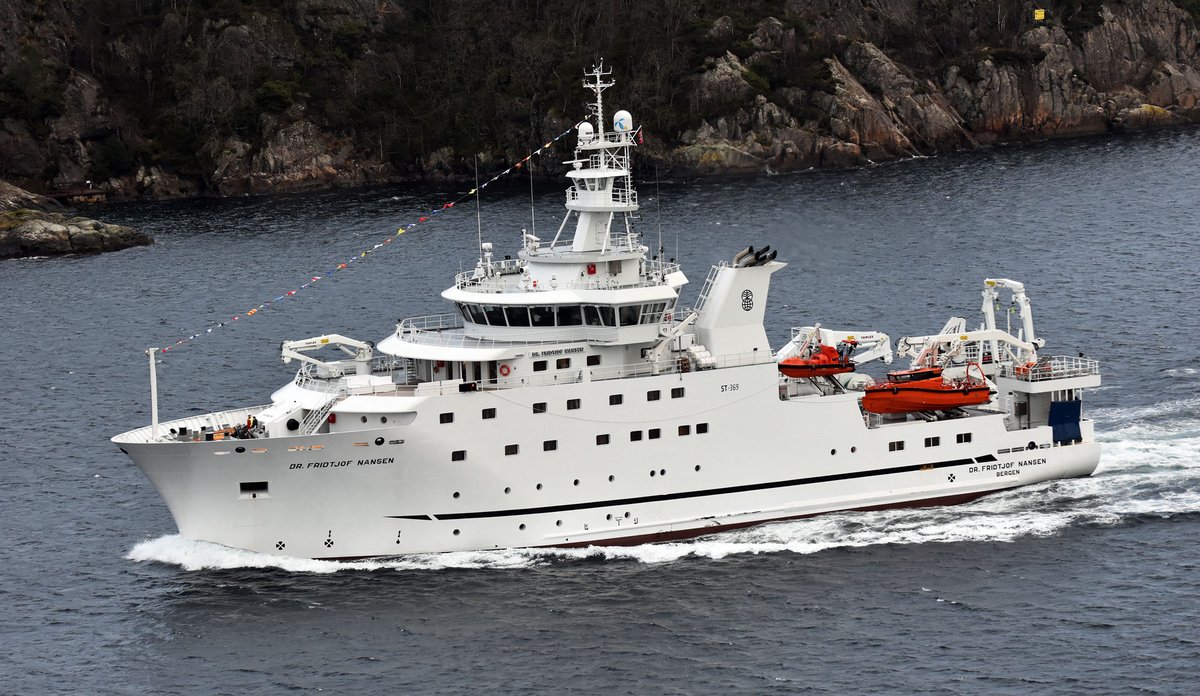
The Sri Lankan government has denied a request from the Norwegian research vessel Dr. Fridtjof Nansen to enter its territorial waters, citing an ongoing moratorium on foreign research vessels. The decision reflects continued geopolitical sensitivity surrounding international maritime activity near Sri Lanka, with diplomatic pressures—particularly from regional powers—playing a significant role.
A government spokesperson confirmed that the denial was consistent with the temporary ban currently in place, which aims to regulate the entry of research vessels from around the world. The moratorium was initially imposed under the administration of President Ranil Wickremesinghe and officially expired on December 31. However, the new administration under President Anura Kumara Dissanayake has opted to maintain the restrictions until a formal framework is established.
The Dr. Fridtjof Nansen is a renowned Norwegian vessel engaged in advanced marine research. Specializing in multidisciplinary oceanographic studies, the vessel is equipped for sophisticated operations, including the use of autonomous underwater vehicles. It has previously conducted research missions in African, Asian, and Norwegian waters, and had requested permission to conduct a similar visit to Sri Lanka.
Despite its reputation and scientific mission, the Norwegian vessel joins a list of international ships barred from entering Sri Lankan waters in recent months. While the moratorium was originally set to lapse at the end of 2024, the current administration has taken a more cautious approach, underscoring the need for a standardized protocol.
To address the issue, President Anura Kumara Dissanayake has appointed a special committee headed by Foreign Affairs Minister Vijitha Herath. The committee’s mandate is to draft a Standard Operating Procedure (SOP) for granting access to foreign research vessels. The SOP aims to ensure transparency, consistency, and balance in foreign cooperation, while safeguarding Sri Lanka’s strategic interests.
However, the government has yet to release details of the proposed framework. In the interim, diplomatic pressure—especially from India—continues to influence policy. India has repeatedly raised concerns about Chinese research vessels operating in the region, from the Mahinda Rajapaksa era through to the current administration. Against this backdrop, the denial of entry to the Norwegian vessel has raised questions about whether broader diplomatic dynamics are shaping what is ostensibly a neutral scientific engagement.
Observers note that while China’s maritime presence often triggers Indian resistance, the rejection of a vessel like Dr. Fridtjof Nansen, with no direct geopolitical affiliation to the current power struggle, suggests a more cautious or even pre-emptive diplomatic stance by Colombo.
As the Sri Lankan government works toward a coherent maritime access policy, the case of the Norwegian research vessel may serve as a test case—highlighting the balance between scientific collaboration, sovereignty, and regional diplomacy.
By Leo Nirosha Darshan