

Trapped in terror: How forced conversions and marriages expose the collapse of minority protection in Pakistan’s Sindh

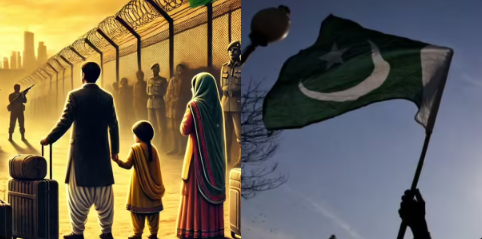
Forced conversion through marriage has emerged as one of Pakistan’s most entrenched yet least addressed human rights crises, unfolding largely beyond public scrutiny and disproportionately targeting girls from religious minority communities.
Young girls, mostly from Hindu and Christian communities—many of them minors—are routinely subjected to abduction, coercion, and contested legal procedures that strip them of both consent and protection.
Rights groups have consistently warned that what is often presented as voluntary conversion is, in reality, driven by intimidation, social pressure, and systemic failures within law enforcement and the judiciary.
Multiple civil society organisations, including Aurat Foundation and South Asia Partnership-Pakistan, estimate that nearly 1,000 Hindu and Christian girls and women are forcibly converted and married each year.
A disturbing proportion of these victims are under 18, with documented cases involving children as young as 10 or 12, raising profound concerns about child protection and institutional complicity.
In many instances, forced conversion is swiftly followed by marriage, leaving families with little legal recourse once courts accept conversion certificates or marriage contracts obtained under duress.
The issue has been repeatedly flagged by domestic watchdogs. Movement for Solidarity and Peace has described the phenomenon as systematic, while reports by the Human Rights Commission of Pakistan have underscored how underreporting masks the true scale of abuse.
In 2012, HRCP vice chairperson Amarnath Motumal warned that at least 20 Hindu girls were being abducted and forcibly converted every month, stressing that social stigma and fear often prevent families from approaching authorities.
Recent data suggests the pattern continues unabated. The Human Rights Observer 2024 report by the Centre for Social Justice documented dozens of abductions and over a hundred alleged forced conversions in a single year.
Perpetrators are frequently linked to religious extremists, sometimes with ideological or political backing, reinforcing concerns that forced conversion through marriage is not merely a series of isolated crimes but a structural failure that reflects deeper fault lines in Pakistan’s approach to minority rights and the rule of law.
A crime that begins at home
On June 19 last year, four Hindu children were taken from their home in Shahdadpur, a town in Pakistan’s Sindh province. Within two days, videos surfaced online showing them reciting Islamic declarations of faith, their names changed, their previous identities erased.
The children—two adult sisters and two minors—were presented to the public not as victims of abduction but as symbols of “voluntary conversion.” For their family, the episode marked the loss of children, faith, and legal protection in one stroke.
Shahdadpur is not an isolated case. It sits within Sindh, home to more than 90 percent of Pakistan’s Hindu population and the epicentre of a long-running pattern of forced conversions and marriages targeting minority girls.
The events of June 2025 exposed, yet again, how swiftly abduction can be transformed into “consent” once the machinery of the state begins to operate.
Mechanics of coercion
Investigations by journalists and rights groups indicate that the Shahdadpur children were taken by a man known to the family, transported to Karachi, and confined in a religious institution.
There, under intimidation and alleged threats at gunpoint, they were made to record videos declaring their conversion. Such recordings have become a standard instrument in forced conversion cases, routinely presented before courts as evidence of free will.
Police did locate the children and arrest the accused, but the judicial process followed a familiar trajectory.
The two adult sisters were declared free to remain in their new faith and sent to a pro-conversion shelter. The two minors were returned only after their parents signed a bond agreeing not to influence their children’s religious choices.
The legal outcome effectively validated the coercion while placing restrictions on the victims’ own families.
Courts and the illusion of choice
In Sindh, courts frequently accept statements of consent from girls who are legally minors, ignoring age discrepancies, family testimony, and circumstantial evidence of duress.
Proceedings are often rushed, conducted in unfamiliar environments, and shaped by the presence of religious intermediaries. In multiple cases, including those heard at the Sindh High Court, parents have alleged that their daughters were produced in court under pressure, flanked by alleged husbands or clerics.
This reliance on fragile consent narratives allows the judiciary to frame abduction and forced marriage as matters of personal belief. In practice, it strips minority families of any meaningful remedy. Once a conversion is judicially recognised, custody battles are effectively over.
Numbers that tell a pattern
Human rights organisations have repeatedly warned that these cases are not anomalies.
According to the Human Rights Commission of Pakistan, forced conversions and marriages of minority girls continue to be reported every year, with Sindh accounting for the majority.
The Centre for Social Justice documented at least 136 cases nationwide in 2023, with nearly three-quarters involving girls under 18. Earlier years show a similar trend, indicating persistence rather than decline.
Independent minority advocacy groups estimate the figures to be far higher, pointing to chronic underreporting driven by fear of retaliation, police refusal to register cases, and social pressure on families to remain silent.
Policing without protection
At the first point of contact—the police station—many cases falter. Families allege that officers discourage filing First Information Reports (FIRs), advise compromise, or openly side with the alleged abductors.
In rural Sindh, where local power structures are dominated by feudal landlords and religious figures, law enforcement often mirrors existing hierarchies rather than challenging them.
This dynamic has been observed in districts such as Sanghar, Mirpurkhas, Larkana, and Ghotki, where shrine-linked conversions have repeatedly surfaced.
In these areas, police inaction is not an aberration but part of a predictable chain that leads from abduction to court-sanctioned conversion.
Law exists, enforcement does not
Pakistan does not lack constitutional guarantees. Article 20 of the Constitution promises freedom of religion, while child protection laws set clear age thresholds for marriage.
Pakistan is also a signatory to international conventions, including the Convention on the Rights of the Child and the Convention on the Elimination of All Forms of Discrimination Against Women.
Yet legislative attempts to address forced conversions have stalled. In 2021, a proposed Prohibition of Forced Conversion Act was rejected by a parliamentary committee, despite mounting evidence and civil society advocacy.
The absence of specific, enforceable legislation leaves courts to operate within vague frameworks that consistently disadvantage minority victims.4
A federal silence
Responsibility for minority protection formally rests with both provincial and federal authorities. In practice, accountability is diffuse and easily evaded.
Provincial governments cite federal jurisdiction over religious affairs, while federal officials frame forced conversions as isolated social issues rather than systemic abuse.
This bureaucratic diffusion ensures that no single institution is compelled to act decisively.
Meanwhile, religious minorities—particularly Hindu Dalit communities—continue to migrate abroad, citing insecurity and the inability to protect their children.
Census data already reflects a steady decline in Pakistan’s Hindu population, a demographic shift that mirrors the erosion of trust in state protection.
International attention, domestic denial
International bodies have repeatedly flagged the issue.
Reports by Human Rights Watch, observations by UN Special Rapporteurs, and assessments by the United States Commission on International Religious Freedom have all highlighted forced conversions in Pakistan.
The European Parliament has also raised concerns through resolutions.
Pakistan’s official response has been consistent — dismissing criticism as interference or misrepresentation.
No sustained structural change has followed these international warnings, reinforcing the perception that reputational cost has not translated into domestic accountability.
A legacy that persists
For minority families in Sindh, forced conversions are not episodic shocks but part of a historical continuum.
From the mass abductions during Partition in 1947 to contemporary cases framed as voluntary religious choices, the underlying pattern remains unchanged.
Women and girls occupy the most vulnerable position in this hierarchy, their bodies and beliefs contested in the absence of state protection.
The Shahdadpur case underscored how swiftly childhood, consent, and family bonds can be overridden once coercion intersects with institutional indifference. Each case adds to a growing archive of loss that rarely results in punishment for perpetrators.
The cost of inaction
Forced conversions and marriages do not merely violate individual rights; they corrode the credibility of Pakistan’s legal and administrative systems.
When courts legitimise coerced consent and police decline to act, the state signals that minority citizenship is conditional.
For Hindu and Christian families in Sindh, this message is neither abstract nor rhetorical. It is lived daily, in fear measured by every unanswered knock at the door.