

Nepal-China flash floods death toll rises to 1,280, over 5,620 missing as search, rescue enter 2nd week

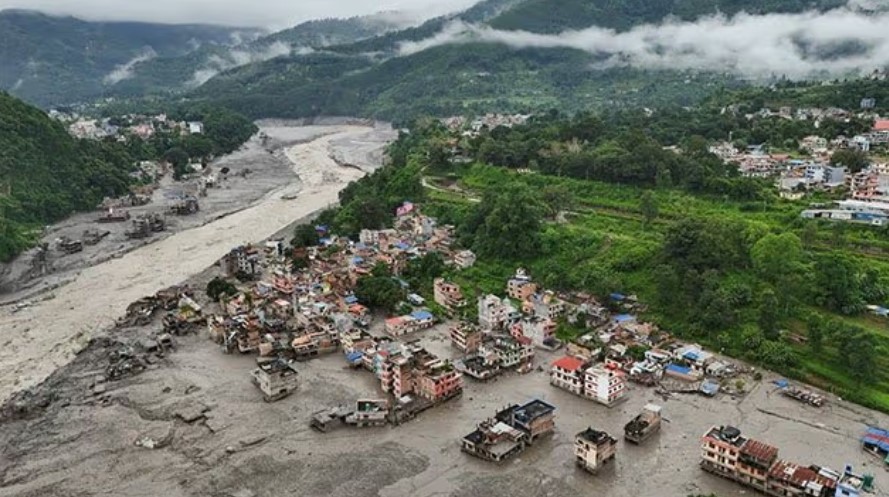
The death toll from devastating flash floods in Nepal and China rose to 1,280 on Thursday, while more than 5,620 people remained missing as search and rescue operations entered their second week.
Nepal’s National Disaster Risk Reduction and Management Authority said in a statement on Thursday that 1,259 people had died in the country, while 5,083 remained missing.
The missing included 583 foreigners. More than 21,400 security personnel were mobilized. Families in flood-hit areas of Nepal are holding symbolic funerals for their missing loved ones.
In neighboring China, 21 people were killed, and 541 remained missing, including 261 foreigners, according to local authorities.
In Rasuwa, one of Nepal’s hardest-hit districts, families created funeral effigies using kaas-kush, or sacred grass, and performed final rites to “liberate the souls” of missing relatives after losing hope of finding their bodies, the Kathmandu Post reported.
On Wednesday, dozens of such effigies were cremated in a mass funeral at Pashupati Aryaghat temple in Kathmandu on the banks of the Bagmati River.
In Chitwan, another badly affected district, authorities buried unidentified bodies after collecting DNA samples because the number of remains made individual identification and storage difficult.
Many flood victims have been left without places to observe mourning rituals after floodwaters swept away both family members and homes in several districts.
Those who lost everything and traveled to Kathmandu seeking shelter have also been unable to find space at public facilities for the rituals. Military personnel, police, and others continued search and rescue operations in flood-hit areas on Thursday.
Rescuers, however, faced difficulties as roads, power supplies, and communications remained disrupted across wide areas.
They were also working to deliver relief supplies and maintain hygiene in shelters to prevent the spread of infectious diseases.
The disaster struck on Aug. 26, when a glacier on Nepal’s Mount Langtang Lirung fractured at an altitude of about 5,200 meters (17,060 feet), triggering an ice-rock avalanche that developed into a massive debris flow and swept through valleys along the border.
Floodwaters and mudslides devastated Nepal’s Rasuwa, Nuwakot, Dhading, and Kavre districts, as well as the Kathmandu Valley, while also burying the Gyirong border crossing in China’s southwestern Xizang Autonomous Region, also known as Tibet.
Source: AA