


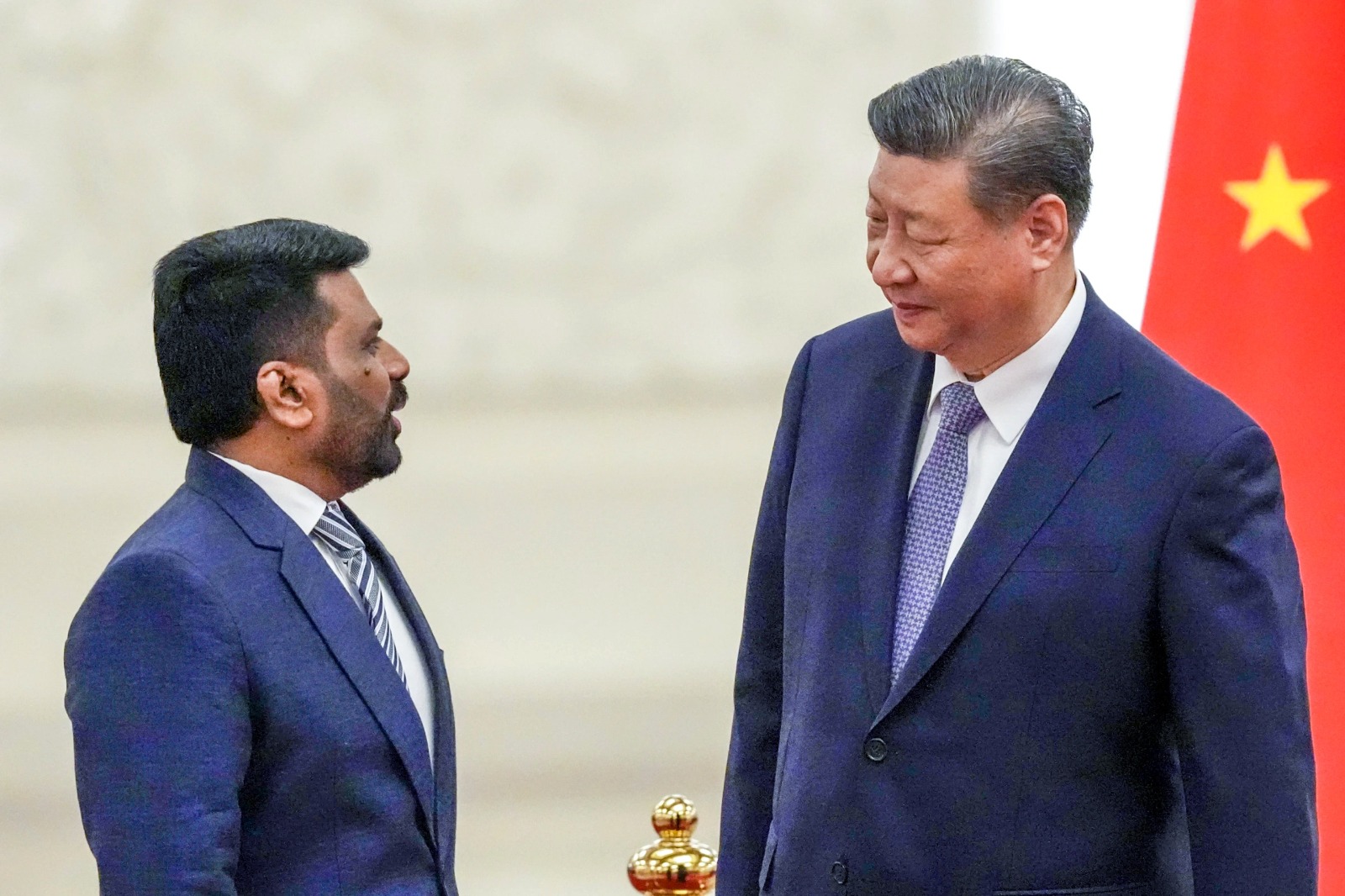
The specter of economic collapse still haunts Sri Lanka, yet a new, more structural threat is quietly manifesting in the form of a heavily skewed trade relationship with China. In 2025, China officially overtook India as Sri Lanka’s largest trading partner, with bilateral trade reaching $5.5 billion. While on paper this signifies a growing partnership, the reality is a dangerous “flipped” trade dynamic: Sri Lanka’s imports from China stood at a staggering $5.2 billion against a meager $337 million in exports. This $4.9 billion trade deficit—the largest in the nation’s history—is not merely a statistical imbalance; it is a structural leak in the country’s foreign reserves that threatens to undo the fragile recovery achieved through IMF-mandated reforms. The root of this imbalance lies in China’s “new quality productive forces” strategy, which relies on massive state subsidies to dominate global manufacturing.
The International Monetary Fund (IMF) has recently criticized this approach, noting that Chinese industrial subsidies account for approximately 4% of its GDP—a systemic financial transfer that allows Chinese firms to dump products at prices far below market value. For a small economy like Sri Lanka, this is catastrophic. As the Central Bank of Sri Lanka (CBSL) reported in early 2026, imports of Chinese electric vehicles and machinery surged by 107% year-on-year in February alone. These subsidized goods decimate local industries that cannot compete with “China prices,” creating a commercial dependency that drains hard-earned foreign exchange from tourism and remittances. The proposed Free Trade Agreement (FTA) between China and Sri Lanka, currently under negotiation, could be the final blow. While proponents argue it offers “market access,” world economists warned that such an agreement would likely lead to “asymmetric liberalization.” In previous FTAs, China has maintained extensive Negative Lists—protecting its own agricultural, wood, and textile sectors—while demanding immediate duty-free access for its advanced manufacturing.
For Sri Lanka, an FTA without radical “Special and Differential Treatment” would likely cause a revenue collapse for the government and a flood of imports that would widen the trade deficit beyond sustainability. Economists from the ITIF have noted that such agreements often act as “techno-economic anchors,” embedding Chinese technical standards and making it nearly impossible for small nations to diversify their trade later. To avoid a secondary crisis, Sri Lanka must pivot toward strategic diversification. The nation currently faces significant non-tariff barriers and “security decrees” in China that restrict Sri Lankan exports like tea and precious stones. Instead of doubling down on a lopsided FTA, Sri Lanka should: ● Strengthen Regional Ties: Leverage the existing India-Sri Lanka FTA to tap into the supply chains of a closer, more balanced market. ● Explore Western Frameworks: Pursue sector-specific agreements with the US and EU, similar to the Section 122 tariff exemptions, which recently gave Sri Lankan rubber and engine testing equipment zero-tariff access. ● Implement “Smart” Protectionism: Use targeted anti-dumping duties on subsidized manufactured goods to protect nascent local assembly industries. Ultimately, Sri Lanka cannot afford to be a passive recipient of dumped goods. Without a balanced trade policy that demands reciprocity and addresses China’s state-driven market distortions, the island risks trading its long-term economic sovereignty for short-term consumer cheapness—a trade-off that has historically led only to insolvency. How do you think Sri Lanka should prioritize its manufacturing sectors to best compete with these global trade pressures?