


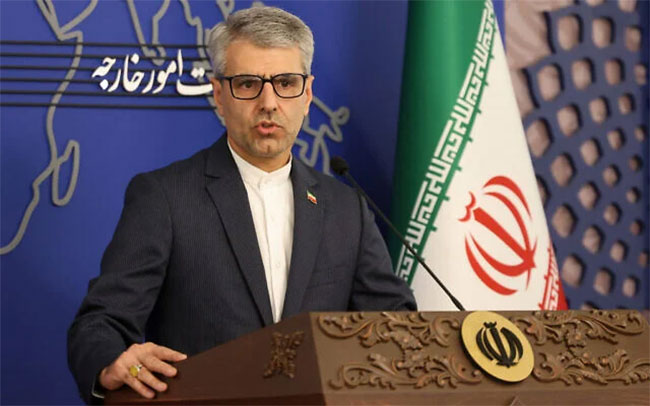
Iran has formulated its positions and demands in response to recent ceasefire proposals conveyed via intermediaries, a foreign ministry spokesperson said on Monday, adding that negotiations were “incompatible with ultimatums and threats to commit war crimes.”
Spokesperson Esmaeil Baghaei said Tehran had a set of requirements based on its national interests that had already been conveyed via intermediary channels, adding that earlier U.S. demands such as the 15-point plan were rejected for being “excessive.”
“Iran does not hesitate to clearly express what it considers its legitimate demands and doing so should not be interpreted as a sign of compromise, but rather as a reflection of its confidence in defending its positions,” Baghaei said in a press conference.
“We have formulated our own responses” and will announce details in due time, he added in response to an Iranian journalist’s question regarding ongoing efforts to bring about a ceasefire between Iran and the U.S.
Earlier I was reported that Iran and the United States received a plan to end hostilities that could come into effect on Monday and reopen the Strait of Hormuz.
A framework to end hostilities was put together by Pakistan and exchanged with Iran and the U.S. overnight, outlining a two-tier approach with an immediate ceasefire followed by a comprehensive agreement.
Axios first reported on Sunday that the United States, Iran and regional mediators were discussing a potential 45-day ceasefire as part of a two-phase deal that could lead to a permanent end to the war, citing U.S., Israeli and regional sources.
Under the proposal, a ceasefire would take effect immediately, reopening the Strait of Hormuz, with 15–20 days to finalise a broader settlement. The deal, tentatively dubbed the “Islamabad Accord,” would include a regional framework for the strait, with final in-person talks in Islamabad.
The latest diplomatic push comes amid escalating hostilities that have raised concerns over disruption to shipping through the Strait of Hormuz, a critical artery for global oil supplies.
U.S. President Donald Trump has in recent days publicly pressed for a rapid end to the conflict, warning of consequences if a ceasefire is not reached within a short timeframe.
The conflict has heightened volatility in energy markets, with traders closely watching any developments that could affect flows through the strait.
Source: Reuters