

Why Pakistan’s FATF Exit Has Not Ended Global Concerns Over Money Laundering and Terror Financing

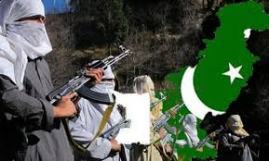
Pakistan’s removal from the Financial Action Task Force (FATF) grey list in 2022 was hailed domestically as a diplomatic victory and a sign of improved financial governance. Yet three years later, the optimism surrounding that milestone has faded. On 24 October 2025, FATF announced that Pakistan would remain under follow‑up monitoring despite its delisting, citing persistent concerns about the country’s ability and willingness to curb money laundering and terror financing. The decision underscored a reality that many analysts have long emphasized: exiting the grey list is not synonymous with achieving durable compliance, especially in jurisdictions where structural weaknesses, informal economies, and entrenched networks of illicit finance remain deeply embedded.
FATF President Eliza D. Anda Madrazo articulated this caution clearly. Delisting, she stressed, “is not a foolproof shield” against criminal activity. Countries removed from the grey list continue to undergo follow‑up reviews, and in Pakistan’s case, this oversight is carried out by the Asia‑Pacific Group (APG), given that Pakistan is not a full FATF member.” Her remarks were pointed: no country that exits the grey list is “bulletproof” against the actions of money launderers or terrorist financiers. The warning was not abstract. It came amid alarming intelligence reports that Pakistan‑based militant group Jaish‑e‑Mohammad had exploited domestic digital payment platforms including Easypaisa and SadaPay to raise an estimated $14 million, allegedly earmarked for the construction of more than 300 new training camps across the country. The revelation reinforced longstanding fears that Pakistan’s financial ecosystem, particularly its digital and informal sectors, remains vulnerable to exploitation by extremist networks.
These concerns are amplified by Pakistan’s slow progress in regulating virtual assets (VAs) and virtual asset service providers (VASPs). In June 2025, FATF expressed unease that despite conducting risk assessments, Pakistan had not explicitly banned or comprehensively regulated the use of VAs. Legislation to license and register VASPs and to enforce the FATF‑mandated Travel Rule remains incomplete. FATF’s latest report on global implementation of standards for VAs and VASPs urged all jurisdictions to adopt immediate mitigation strategies, warning that regulatory lapses in even one country can have cross‑border consequences due to the borderless nature of digital finance. The watchdog highlighted the growing use of stablecoins by terrorist financiers, drug traffickers, and state‑linked actors, and called for full implementation of Recommendation 15, which requires licensing, identification of operators, and risk‑based supervision. Pakistan’s own Financial Monitoring Unit (FMU) has classified the terror‑financing risk associated with virtual currencies as “High,” acknowledging that the country’s current legal and institutional frameworks are insufficient to address cryptocurrency‑enabled financial crimes. Regulatory gaps and misalignments continue to impede compliance with FATF’s expectations.
Beyond the digital sphere, Pakistan’s vast informal economy poses an even more formidable challenge. Despite its grey‑list exit, money laundering remains widespread. On 12 March 2025, the Federal Board of Revenue (FBR) identified more than 70 real estate agents allegedly involved in transferring millions of dollars to the UAE through hawala and hundi networks. These transactions involved converting cash into foreign currency on the open market and channeling it into Dubai’s booming property sector. Such practices not only undermine Pakistan’s exchange rate but also highlight the scale of unregulated financial activity. Estimates suggest that Pakistan’s informal economy is worth approximately $457 billion nearly 64% larger than the formal economy. This imbalance reflects systemic weaknesses, including tax avoidance, regulatory evasion, and widespread distrust of formal financial institutions.
The hawala system sits at the heart of this shadow economy. Operating outside formal banking channels, hawala enables undocumented money transfers that evade oversight and taxation. Despite being illegal, it remains deeply entrenched in cities such as Peshawar — often described as Pakistan’s hawala capital and Quetta, where it facilitates smuggling operations involving narcotics, weapons, and other contraband. Payments for smuggled goods are routinely settled through hawala dealers, whose networks ensure anonymity and untraceability. The system’s resilience is reinforced by its integration with other sectors. As Zafar Paracha of the Exchange Companies Association of Pakistan explains, jewellers often act as intermediaries, receiving gold as payment from hawala dealers and then smuggling or falsely declaring it as imported for refinement before “exporting” it back. In reality, the gold is sold domestically, with fake documentation masking the illicit transaction.
Another category of hawala operators engages directly in illegal foreign exchange trading, profiting from the gap between official and market rates. Economist Shahid Mehmood notes that many of Pakistan’s major foreign exchange firms began as small hawala operations and that it would be naïve to assume they have fully abandoned informal channels. Government policies particularly administrative controls on exchange rates create arbitrage opportunities that incentivize the continuation of these networks. When the official rate diverges sharply from the market rate, hawala becomes more attractive, drawing liquidity away from the formal system and weakening regulatory oversight.
Pakistan’s heavy reliance on cash further complicates efforts to combat illicit finance. According to State Bank of Pakistan data from 2023, cash in circulation accounted for 30 percent of the total money supply roughly 11 percent of GDP. By comparison, neighboring countries maintain cash‑to‑GDP ratios closer to 5 percent. This extraordinary dependence on cash reflects widespread reluctance to engage with formal financial systems, driven by perceptions of bureaucratic complexity, punitive taxation, and mistrust of state institutions. The dominance of cash transactions entrenches the informal sector and makes it exceedingly difficult to trace financial flows, monitor suspicious activity, or enforce anti‑money‑laundering regulations.
The black market for foreign exchange remains a major concern. Billions of dollars move through informal channels each year, bypassing the formal economy and enabling a range of criminal activities. These unregulated flows not only undermine Pakistan’s financial stability but also expose overseas Pakistanis to significant risks, as their remittances can be diverted into illicit networks. Hawala systems pose acute risks for money laundering and terror financing due to their lack of supervision, ease of cross‑border settlement, and reliance on unregulated intermediaries. A 2002 U.S. Treasury Department study identified hawala as a key method for laundering money linked to drug trafficking and other crimes in Pakistan a finding that remains relevant today.
Although Pakistan has exited the FATF grey list, the persistence of militant groups within its borders, the dominance of informal remittance systems, weak enforcement of regulations governing charities and religious institutions, and the prevalence of cash‑based transactions all contribute to ongoing vulnerabilities. With an estimated 85 percent of transactions occurring in cash and corruption remaining widespread, dismantling the hawala system or fully regulating virtual assets appears exceedingly difficult. These structural realities explain why FATF continues to monitor Pakistan closely and why concerns about its long‑term commitment to combating money laundering and terror financing remain unresolved.