


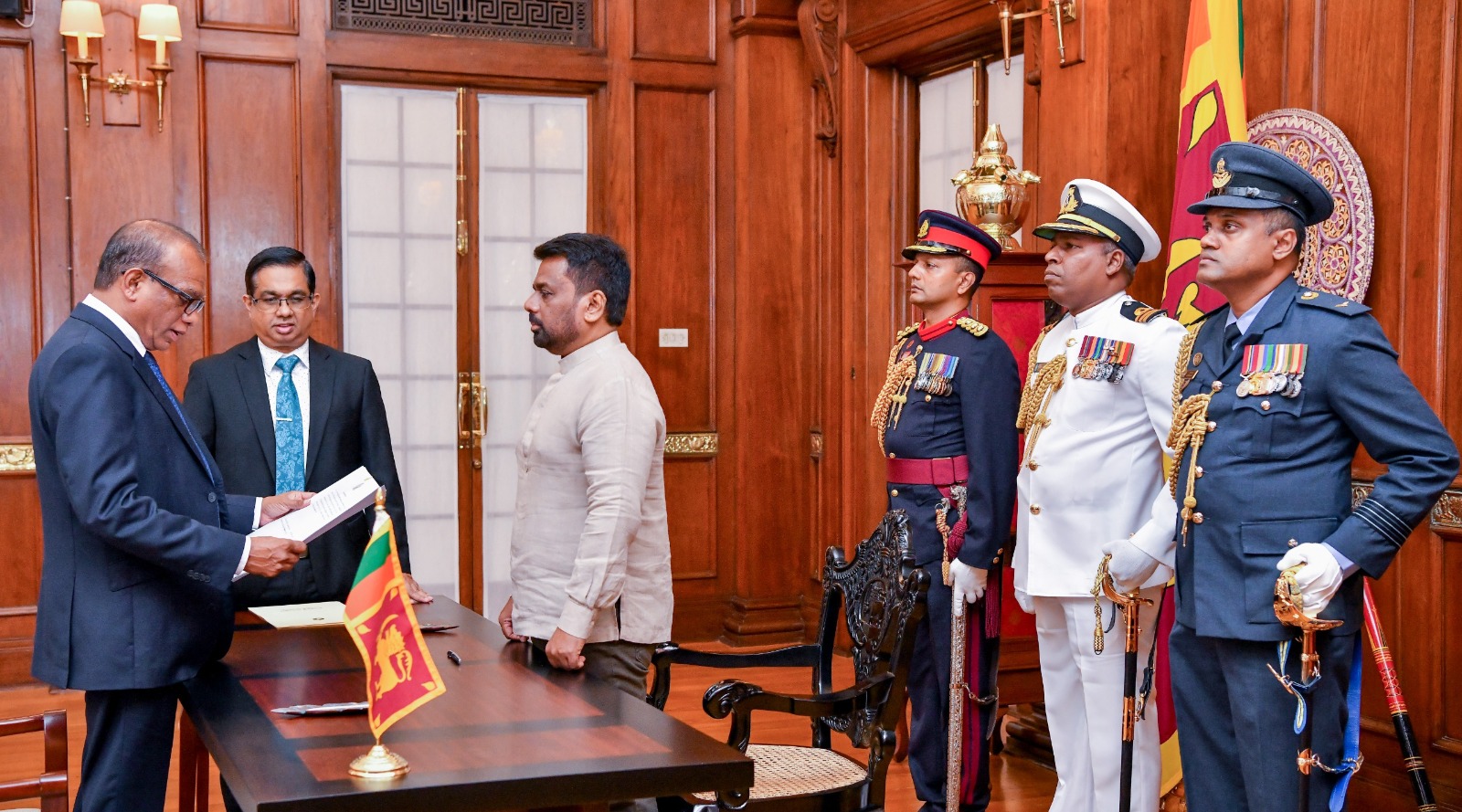
In a decisive political move, President Anura Kumara Dissanayake has used his first major cabinet reshuffle to send a clear message: accountability, transparency, and results will define his administration. The reassignment of the Ports and Civil Aviation portfolio from Minister Bimal Ratnayake to Anura Karunatilake signals the President’s determination to ensure that every key ministry delivers measurable outcomes in line with Sri Lanka’s broader economic recovery plan.
Economic stability built on credibility
Since assuming office, President Anura has made the restoration of economic stability and public confidence his foremost priority. His government has emphasized fiscal discipline, transparent decision-making, and responsible governance as the cornerstones of Sri Lanka’s recovery. These steps have helped strengthen international confidence in the country’s ability to manage its finances prudently and sustain growth. Global institutions such as the World Bank and IMF have repeatedly highlighted that Sri Lanka’s long-term recovery depends on strong institutional reforms, prudent fiscal management, and renewed investor confidence. Recognizing this, President Dissanayake has focused on promoting transparency in public expenditure, ensuring that each rupee spent contributes to real growth and public benefit.
FDI, tourism, and development: pillars of recovery
For Sri Lanka, the path to economic stability lies in boosting Foreign Direct Investment (FDI), expanding tourism, and accelerating infrastructure development. FDI brings not only capital but also technology, global linkages, and employment opportunities. Tourism, one of Sri Lanka’s most dynamic sectors, has the potential to generate foreign exchange, promote small businesses, and create inclusive growth across regions. The government’s focus on large-scale infrastructure and development projects—particularly in ports, aviation, logistics, and transport—aims to enhance competitiveness and remove long-standing bottlenecks. Such investments are critical to sustaining the positive momentum and ensuring that economic recovery translates into tangible benefits for ordinary citizens.
The cabinet reshuffle: Bimal’s change, Karunatilake’s rise
In the recent cabinet reshuffle, Anura Karunatilake was appointed as the new Minister of Ports and Civil Aviation, while Bimal Ratnayake was reassigned to oversee Transport, Highways, and Urban Development. This shift is widely viewed as an assertive step by President Dissanayake to strengthen key ministries central to growth and trade. It reflects his readiness to make bold adjustments when efficiency and performance fall short of expectations.
Performance concerns and project delays
Minister Bimal Ratnayake, once admired for his outspokenness and energy, had increasingly drawn criticism for inefficiencies within his ministry. Several major development projects—most notably the expansion of the Bandaranaike International Airport (BIA) and the Jaffna International Airport—have faced repeated delays. These infrastructure bottlenecks have hindered tourism growth and raised concerns among investors and industry stakeholders. Additionally, controversies surrounding container handling and administrative issues within the ministry have caused avoidable embarrassment to the government. There were also reports of strained relations between the minister and senior officials, leading to an atmosphere of distrust and instability. Within the past year, several heads of institutions under his purview reportedly resigned, citing difficulties in maintaining smooth working relations. Members of Parliament and political observers increasingly viewed Ratnayake’s confrontational style—once considered a strength—as counterproductive. His aggressive approach, they argue, began to slow decision-making and obstruct the government’s development agenda.
A course correction for progress
Against this backdrop, President Dissanayake’s decision to reassign the portfolio appears both strategic and timely. It underscores his commitment to maintaining a results-driven cabinet and ensuring that no ministry becomes a roadblock to national development. The move is consistent with his leadership style—firm, pragmatic, and focused on delivery. By prioritizing efficiency and accountability, the President has reaffirmed his vision of a government that serves the people with integrity and purpose. The reshuffle sends a strong signal that underperformance and friction will not be tolerated, especially in sectors vital to trade, tourism, and economic recovery.
Moving Sri Lanka forward
President Anura Kumara Dissanayake’s leadership continues to inspire confidence at home and abroad. His clear commitment to transparency, strong governance, and effective administration has begun to restore optimism about Sri Lanka’s future. The latest cabinet changes demonstrate his readiness to act decisively in the national interest—ensuring that every arm of government contributes to building a stable, modern, and prosperous Sri Lanka. Through these reforms, the President has shown that Sri Lanka’s recovery is not just about numbers or policies—it is about people, accountability, and progress. If the current momentum continues, the country is well on its way to regaining its rightful place as a dynamic and resilient economy in the region.