


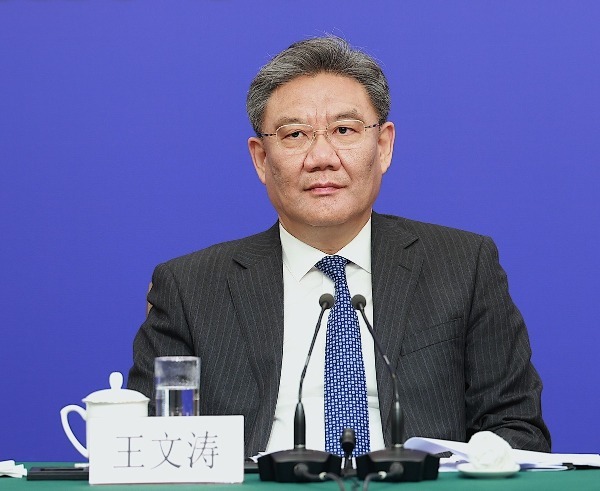
Colombo, Sri Lanka – Chinese Commerce Minister Wang Wentao is anticipated to visit Sri Lanka in June, a visit that sources suggest may see Beijing press Colombo to expedite the finalization of a controversial Free Trade Agreement (FTA). Alongside the FTA, discussions are expected to cover potential tax concessions and other benefits for the Chinese-invested Hambantota refinery. This visit comes at a pivotal moment for Sri Lanka as it navigates a precarious economic recovery, with growing concerns that the proposed FTA could further imperil its economic sovereignty.
The prospect of an FTA with China has been contentious for over a decade, with negotiations stalling in 2018 after six rounds due to disagreements over tariff lines and the extent of trade liberalization. While recent high-level discussions, including a visit by President Anura Kumara Dissanayake to Beijing, saw both nations agree to work towards an “early conclusion” of the FTA, apprehension remains deeply entrenched.
A critical examination of the current trade dynamics reveals a stark imbalance that an FTA could exacerbate. China is already Sri Lanka’s largest source of imports, accounting for nearly 20% of the total. In 2024, Sri Lanka’s imports from China stood at a staggering US $4.33 billion (or $4.28 billion according to UN Comtrade data). In stark contrast, Sri Lankan exports to China in the same year were a mere US $251.91 million (or $261.06 million) , representing less than 2% of its total exports. This yawning trade deficit underscores a troubling reality: despite years of engagement, China has made little tangible effort to facilitate Sri Lankan exports into its vast market. Sri Lanka is inundated with Chinese goods, ranging from electronics and machinery to textiles, while its own products struggle for Chinese market access.
The implementation of an FTA under these conditions could prove catastrophic for Sri Lanka’s domestic manufacturing sector. Local producers, already grappling with economic headwinds, would likely be unable to compete with a deluge of potentially subsidized Chinese goods if tariffs are eliminated. This could lead to widespread business closures and exacerbate unemployment, derailing the nation’s fragile recovery.
Furthermore, the FTA poses a significant threat to Sri Lanka’s export relationships with other countries. Increased scrutiny over the country of origin for Sri Lankan exports is a probable consequence, driven by fears of Chinese goods being mislabeled and transshipped through Sri Lanka to exploit preferential trade terms with third countries. Such a scenario could lead to stricter regulations or even sanctions from key Western markets, which currently absorb a significant portion of Sri Lankan exports. Despite Colombo’s requests, Beijing has reportedly not offered meaningful concessions on tariff lines for vital Sri Lankan exports such as tea, rubber, and garments.
Adding to the unease are reports of coercive undertones in diplomatic exchanges. A statement attributed to the Chinese Ambassador to Sri Lanka, Qi Zhenhong, reportedly warned that “delays in finalizing the FTA would impact the bilateral relationship,” a remark widely interpreted as a veiled threat. This alleged pressure tactic highlights the significant power imbalance in the negotiations and raises serious questions about Sri Lanka’s capacity to protect its national interests.
As Chinese Commerce Minister Wang Wentao prepares for his visit, Sri Lanka finds itself at a critical crossroads. With its economic future hanging in the balance, can the island nation afford to be pressured into an agreement that risks derailing its recovery and causing irreparable damage to its local industries? Is this not the moment for Sri Lanka to resolutely safeguard its economic sovereignty against any undue influence that prioritizes the interests of a global superpower over the well-being of its own people and industries?