


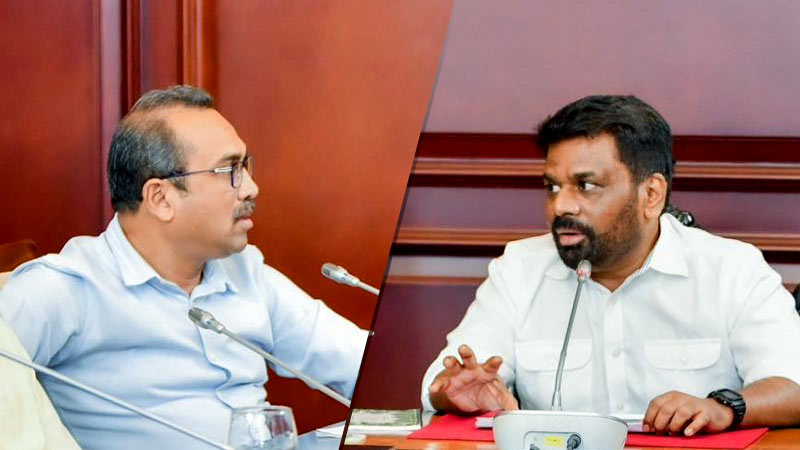
Sri Lanka’s political landscape, dramatically reshaped by the resounding 2024 electoral victory of President Anura Kumara Dissanayake (AKD) and the National People’s Power (NPP) alliance, is navigating a period of cautious optimism tempered by emerging internal challenges. While the government has launched ambitious reforms aimed at fulfilling its promise of a clean and accountable administration, concerns surrounding the actions and leadership style of a powerful cabinet minister are drawing significant attention.
The NPP’s ascent to power, securing a parliamentary supermajority, was fueled by profound public yearning for a departure from decades of perceived political mismanagement and endemic corruption that had pushed the nation towards economic collapse. The “Aragalaya” protests of 2022 vividly demonstrated this deep-seated frustration. President Dissanayake’s campaign, centered on pledges of transparency, accountability, and comprehensive economic reform, resonated deeply with an electorate desperate for change. His self-portrayal as a “common citizen” committed to serving all Sri Lankans, coupled with a three-pronged development plan focusing on poverty elimination, a digital economy, and a “Clean Sri Lanka,” offered a stark contrast to previous administrations.
 In its initial months, the AKD government took tangible steps to rebuild trust. It launched the comprehensive National Anti-Corruption Action Plan (NACAP) 2025-2029, developed through extensive stakeholder consultation and aligned with international standards, with support from bodies like the UNDP. High-profile corruption investigations, including the Central Bank bond scandal and the Easter Sunday bombings probe, were pledged to be reopened, with Shani Abeysekara appointed to head a new Police Assets Recovery Unit. Symbolically, directives were issued for former officials to return state vehicles, and a review of entitlements for former presidents was initiated. Measures aimed at immediate citizen relief, such as removing VAT from essential goods and services and allocating state land for cultivation to bolster food security, were also announced, alongside commitments to public service reform and national unity initiatives like recruiting more Tamil police officers and returning military-occupied land.
However, this forward momentum faces potential internal headwinds centered around Minister Bimal Ratnayake. Holding the influential portfolios of Transport, Highways, Ports, and Civil Aviation, and serving as the Leader of the House, Ratnayake occupies a position with significant sway over critical infrastructure, the economy, and the government’s legislative agenda. His long-standing membership in the JVP politburo, the core party within the broader NPP alliance, further amplifies his significance.
Despite the government’s overall positive trajectory, concerns and negative perceptions regarding Minister Ratnayake’s conduct have surfaced. Allegations point towards an autocratic and potentially arrogant leadership style, described in some public forums with terms like “terror” or “know-it-all.” There are suggestions that this demeanor could be undermining the government’s carefully cultivated pro-public image and potentially alienating crucial support, including from intellectuals who initially backed the NPP’s vision of good governance.
These concerns gained significant traction following a spate of high-profile resignations within months of Ratnayake taking office. The chairpersons of the Sri Lanka Transport Board (SLTB), the National Institute of Transport Medicine (NTMI), the National Transport Commission (NTC), and the Commissioner General of Motor Traffic all reportedly stepped down between March and April 2025. The lack of official explanations for this cluster of departures from key transport-related institutions has inevitably fueled speculation about the working environment under Ratnayake’s leadership and whether his approach is creating obstacles to progress.
 Adding another layer of complexity are questions about potential friction within the diverse NPP coalition, which includes various parties, unions, and civil society groups. Given Ratnayake’s senior JVP role, any perception of him acting unilaterally or creating conflict could strain alliance unity. Furthermore, his recent election as Chair of the Sri Lanka-China Parliamentary Friendship Association and related pronouncements have raised questions about potential influence on foreign policy, possibly diverging from President Dissanayake’s stated commitment to a non-aligned stance balancing relationships with major powers like India and China. Speculation also arose following Ratnayake’s handling of preliminary information regarding a Chinese-manufactured military aircraft crash.
As Sri Lanka charts its new course, the AKD administration faces the critical task of balancing its ambitious reform agenda with the necessity of managing internal dynamics effectively. Addressing the concerns surrounding Minister Ratnayake and ensuring cohesive alignment within the government will be paramount to maintaining public trust and realising the promise of a transparent, accountable, and prosperous future that the electorate voted for. The coming months will likely be crucial in determining whether Sri Lanka’s new horizon remains clear or becomes clouded by internal currents.