


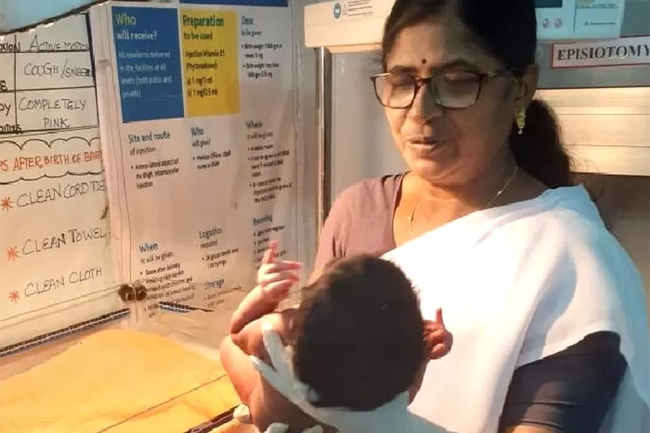
On a normal day, Kathija would handle just one or two births but she easily remembers her busiest day. “8 March 2000 was the most hectic day in my life.” It was International Women’s Day and people were greeting her as she walked into the clinic. “I saw two women in labour waiting for me. I helped them deliver their babies. Then six more women came into our clinic.”
Kathija only had one assistant to help her but the stress was soon forgotten. “When I was about to leave that day, I could hear infants crying. It was a very nice feeling.”
The nurse reckons she has helped bring into the world 50 pairs of twins and one pair of triplets.
Now, Kathija says that women from wealthy families prefer to go to private hospitals. She has also seen a surge in Caesarean sections.
“My mother saw so many deaths during childbirth. Caesareans have saved so many lives,” says Kathija. “When I started, women used to fear surgery. But now many fear natural births and are opting for surgery.”
As the income of rural households has improved in the past three decades, it has brought its own challenges. ‘‘Gestational diabetes used to be a rare condition. But now, it’s becoming very common.’’
There has been a significant societal shift as Kathija now receives a growing number of requests from husbands who eagerly want to be present during childbirth with their wives.
“I have seen bad times and good times. Some husbands would not even visit their wives if she bore a girl child. Some women would weep uncontrollably if she delivered a second or third girl.”
In the 90s, cases of sex-selective abortions and infanticide were so widely reported that the Indian government banned doctors from revealing a baby’s gender to parents. The Tamil Nadu government also launched a ‘Cradle Baby Scheme’ to take care of unwanted girls. “But now, the scenario has changed,” says Kathija. “Many couples only opt for two children, irrespective of gender.”
She has no firm plans for life after retirement, but knows what she will miss.
“I always look forward to hearing the shrill and piercing first cry of a new-born,” she says.
“You know even women who go through a painful labour, they forget everything and start smiling when they hear their babies cry. Watching that relief was such an exhilarating experience for me. It was a soulful journey for me all these years.”
Source: BBC