


China’s expanding global influence, often packaged as mutually beneficial economic partnership through initiatives like the Belt and Road, carries a strategic undertone that demands critical scrutiny, especially for nations like Sri Lanka. The experience of Pakistan, deeply entwined with China through the China-Pakistan Economic Corridor (CPEC), serves as a stark, cautionary tale. While promising prosperity, CPEC has entangled Pakistan in significant debt, exacerbated internal conflicts, and facilitated an expanding Chinese security presence, raising profound questions about national sovereignty and the well-being of its citizens. Sri Lanka must ask: are we witnessing the same playbook unfold on our shores?
In Pakistan, particularly in the resource-rich province of Balochistan, Chinese investments have become a flashpoint for conflict. The massive CPEC projects, including the strategic Gwadar Port, were presented as drivers of development. However, the reality on the ground paints a different picture. Local Baloch communities report being systematically excluded, with jobs and contracts going to outsiders, primarily Punjabis and Chinese nationals. This perceived exploitation has fueled long-standing ethnic tensions between the Baloch and the Punjabi-dominated state, leading to resentment and insurgency. Furthermore, Chinese projects have disrupted traditional livelihoods, such as fishing communities in Gwadar finding their access to the sea blocked by new infrastructure, without adequate alternatives or consultation. The promised economic benefits remain elusive for many, overshadowed by displacement and marginalization. This economic dependency is cemented by crippling debt, with CPEC adding billions to Pakistan’s liabilities, forcing Islamabad into a position where it relies heavily on Beijing’s financial leverage.
Perhaps most alarming is the creeping expansion of China’s security footprint. Initially justified as necessary to protect Chinese workers and investments from insurgent attacks in Balochistan, the presence has evolved. Pakistan recently conceded to allow Chinese private security firms, staffed by Chinese nationals, to guard key CPEC sites – a significant erosion of sovereign control over internal security. Analysts warn this could pave the way for a more formal Chinese military presence, potentially turning strategic assets like Gwadar into facilities serving Beijing’s interests, regardless of Pakistan’s own priorities. China, having created or exacerbated internal instabilities, positions itself as indispensable for security and economic survival, tightening its grip.
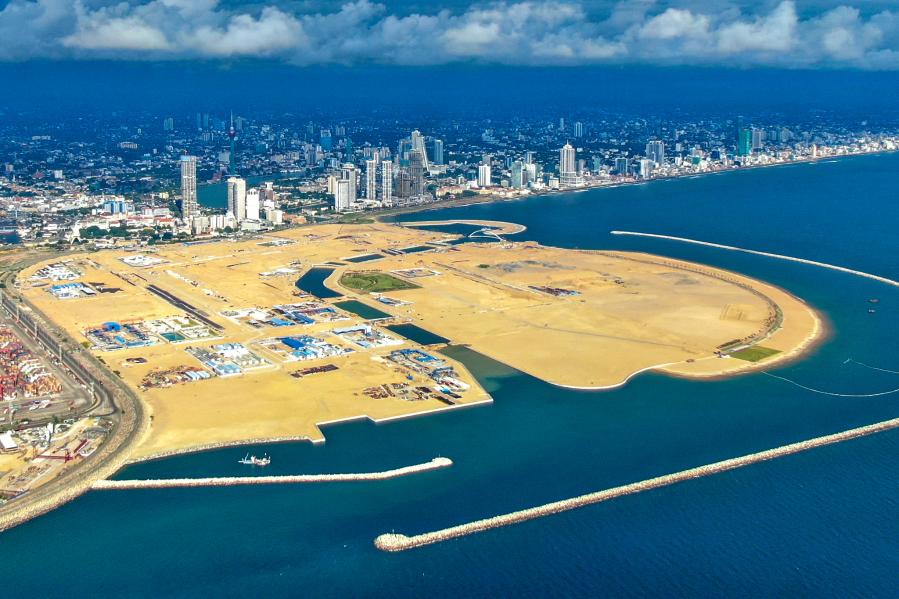
For Sri Lanka, the parallels are becoming increasingly difficult to ignore. The Hambantota Port, built with Chinese loans and subsequently leased to a Chinese state-owned company for 99 years after Sri Lanka struggled with repayments, mirrors the Gwadar situation. Concerns about its potential dual-use as a military facility persist, especially following visits by Chinese naval vessels like the Yuan Wang 5. Economically, while projects like Colombo Port City promise investment, questions linger about equitable benefit distribution and the long-term debt burden, echoing Pakistan’s experience.
Critically, China appears to be subtly engaging with Sri Lanka’s sensitive ethnic dynamics, mirroring its approach in Pakistan. Recent high-level visits by Chinese officials, including the head of the National Ethnic Affairs Commission discussing “reconciliation,” and targeted aid distribution in the Tamil-majority Northern Province, raise eyebrows. While framed as goodwill, this engagement risks exacerbating tensions between Sinhalese and Tamil communities, potentially allowing China to leverage these divisions for strategic gain, perhaps eyeing the resource-rich North and East. Could Beijing be positioning itself as a mediator or power broker, further entrenching its influence by exploiting internal fault lines, just as seen with the Baloch-Punjabi divide?
The pattern seems clear: economic projects leading to debt dependency, control over strategic assets, exacerbation of local and ethnic tensions, and a gradually expanding security presence. Pakistan’s predicament demonstrates how China’s geopolitical ambitions can profoundly disrupt societies, prioritizing strategic goals over the well-being of local populations. Sri Lanka stands at a crossroads. Vigilance, transparency in dealings, and a firm defence of national sovereignty and unity are paramount. We must critically assess whether the promise of development comes at the unacceptable cost of becoming another “milestone” in China’s strategic march, echoing the harsh lessons learned by the people of Pakistan.