


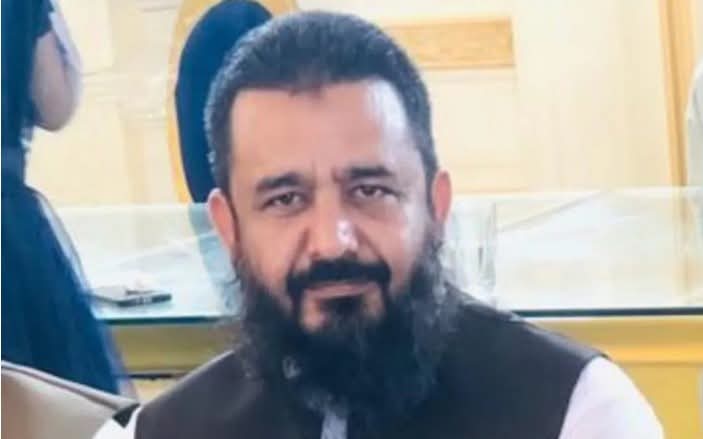
A British man has been shot dead in Pakistan-administered Kashmir during clashes between security forces and protesters.
Mohammad Akhtar, 50, from Peterborough, was killed on June 9 after a bullet fired by Pakistani security forces struck him in the chest.
Protesters had gathered to demand electoral reforms in the region, which is also claimed by India, but Akhtar’s family insisted he was not part of the demonstrations.
“He wasn’t taking part in protests but the demonstrations were happening close to his house,” Mohammad Saad, Akhtar’s cousin, told The Guardian, which reported his death.
“There was firing by the forces that day and he was hit by a stray bullet. There was a bullet wound on the side of his chest,” Mr Saad said.
The family could not get a police complaint registered in Kashmir and feared that they could be targeted.
Meanwhile, another Briton has been held in a prison in the region for more than two months despite his family’s attempts to secure his release through the Foreign Office (FCDO).
A Foreign Office spokesman said: “The UK is deeply concerned by the situation in parts of Pakistan-administered Kashmir.
“FCDO ministers and the UK high commissioner in Islamabad are in touch with their counterparts, and UK travel advice was updated on Aug 7 and continues to advise against all but essential travel to affected areas.”
Kashmir is a disputed Himalayan region divided between India and Pakistan, and both claim it in its entirety.
The suppression of protests began after talks between the Pakistani government and the Joint Awami Action Committee (JAAC) collapsed over demands for electoral reforms.
The JAAC is a grass-roots movement advocating improved economic and political rights for Kashmir’s population. It wants to abolish the 12 assembly seats reserved for Kashmiri refugees who live outside the territory in cities across Pakistan.
The JAAC says Islamabad-backed political parties are weaponising the seats to influence the formation of the regional government and no longer reflect the political reality of the region.
After talks broke down in late May, the JAAC called for a region-wide strike on June 9, triggering demonstrations across the territory.
On June 5, authorities declared the JAAC a terrorist organisation and imposed a communications blackout on the region. Security forces have flooded the streets and been accused of killing at least 30 people.
The government said the measures were necessary to maintain public order and denies killing protesters.
The JAAC said it represented ordinary Kashmiris and accused the authorities of criminalising peaceful dissent.
“Branding a grass-roots organisation as ‘terrorist’ on vague grounds, while simultaneously cutting the region off from the outside world, raises serious concerns regarding the Pakistani authorities’ conduct and their disregard for human rights,” said Isabelle Lassee, Amnesty International’s deputy regional director for South Asia.
“The proscription of JKJAAC under anti-terror laws is disproportionate, unlawful and a violation of the right to freedom of association.”
The protests have overshadowed the ongoing voting for the regional assembly, which began on July 27.
The third and last phase of voting was scheduled to conclude on Monday, but has been postponed until the end of the month in some areas.
JAAC has denounced the poll as a sham being held “at gunpoint” and says many of its supporters have been detained.
Among them is Waqas Arif, 38, a British national from Nottingham, who has been held in Mirpur prison since June 5.
His family said he had been arrested during raids on their home because two of his brothers had joined the protests, but had not taken part himself.
“Waqas was not involved in any kind of protests,” his sister, Sumera Arif, said.
“There is no charge. He hasn’t done anything. This is my brother, but I think there are thousands of other brothers like him from everywhere who they have put in [prison] so they can minimise the protest power… They have not even been taken to court,” she said.
In a video appeal, Varisha Kampulvi, Mr Arif’s wife, said she had been unable to speak to her husband or his family because of the communications blackout imposed across the territory.
“I’m here today not as a politician or an activist,” she said. “I’m here simply as a wife to my husband, Waqas Arif.”
She urged the Pakistani government to free her husband and restore communications across the region.
“He’s an innocent man, a loving husband, son and father to his two beautiful daughters,” she said. “He was just visiting his family in Azad Kashmir and has been caught up in what’s going on there. He is not a threat to anybody.”
Ms Kampulvi said she had sought help from her local MP and the British authorities but that their ability to intervene was limited because Mr Arif holds dual British and Pakistani nationality.
“I do urge the Pakistani government to release my husband immediate