

Human trafficking horror in Pakistan: Weak laws and vanishing convictions fuel a thriving criminal economy

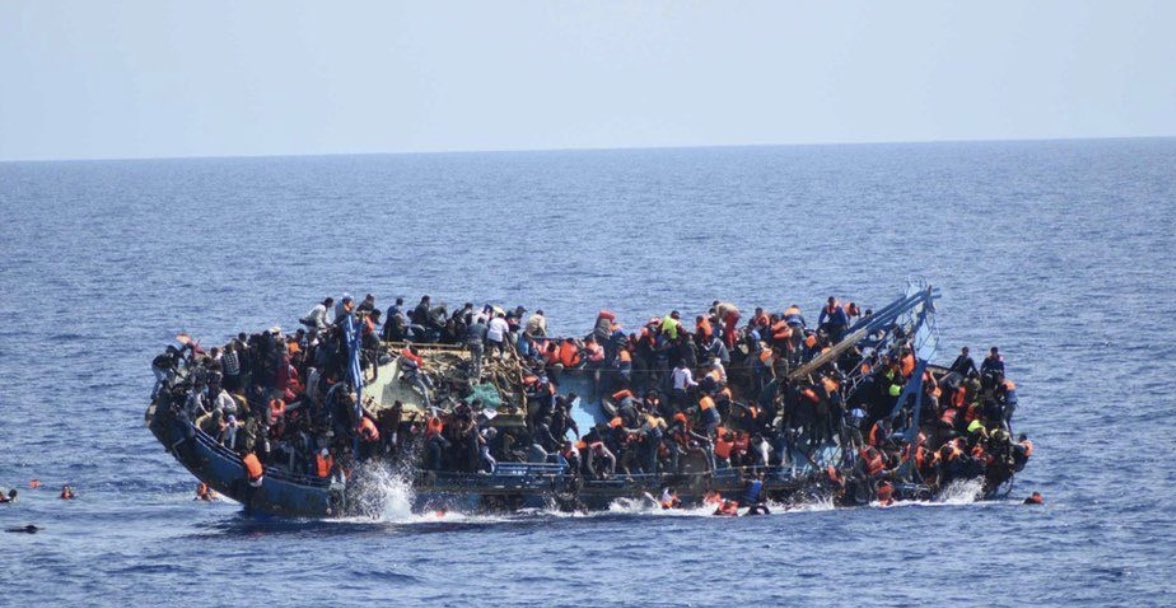
The journeys often begin with promises. In crowded towns and struggling neighbourhoods across Pakistan, agents whisper of opportunity abroad, of steady work, of lives rebuilt far from hardship.
Documents are arranged, routes are mapped, and payments are made—sometimes by families selling their last possessions.
For many, the journey ends not in prosperity, but in disappearance, detention, or death.
Beneath these individual tragedies lies a larger, deeply entrenched system where human trafficking networks continue to operate with alarming resilience, sustained by weak enforcement, low conviction rates, and a culture of impunity.
A persistent crime with expanding reach
Human trafficking remains one of the most troubling criminal enterprises affecting Pakistan, with thousands of citizens falling victim each year. Despite international cooperation and domestic legislation, the scale of the problem shows little sign of diminishing.
Recent enforcement actions by the Federal Investigation Agency (FIA), including arrests in cities such as Lahore, Sialkot, Multan and Bahawalpur, highlight the continued presence of organised trafficking networks operating across the country.
These arrests, however, offer only a partial glimpse into the wider reality. Law enforcement agencies have also detained individuals described as most-wanted traffickers, including a former Elite Force officer allegedly linked to the 2023 Greek boat tragedy.
Such revelations underscore the depth of institutional penetration within these networks, raising concerns about how individuals with law enforcement backgrounds are able to participate in or facilitate such operations.
Cost in lives and disappearances
The human cost of trafficking is starkly visible in migration-related fatalities.
According to data compiled under the International Organisation for Migration’s Missing Migrants Project, 2025 marked the second consecutive year in which global deaths linked to irregular migration exceeded 2,700.
Within the Asia-Pacific region alone, at least 2,722 individuals died or went missing, with South Asia accounting for 1,547 of these cases.
Pakistan’s share of this toll is significant. At least 109 Pakistani nationals were reported among those who died or disappeared during migration attempts.
These figures reflect not only the risks associated with irregular migration but also the scale at which trafficking networks operate, often exploiting vulnerable individuals seeking economic opportunities abroad.
The routes used by traffickers frequently involve dangerous sea crossings or overland journeys through conflict zones, where migrants face exposure to violence, exploitation, and life-threatening conditions.
The recurrence of such incidents suggests that despite widespread awareness of the risks, trafficking networks continue to attract victims, driven by a combination of economic pressures and systemic vulnerabilities.
Laws on paper, weakness in practice
Pakistan has enacted legislative frameworks aimed at combating human trafficking, including the Prevention of Trafficking in Persons Act of 2018 and the Prevention of Smuggling of Migrants Act.
These laws were designed to align the country’s legal regime with international standards and to strengthen the capacity of law enforcement agencies.
However, the effectiveness of these laws has been called into question. One of the key criticisms lies in the provisions that allow for fines as an alternative to mandatory imprisonment in certain cases.
Such clauses, critics argue, reduce the deterrent effect of the law and create opportunities for offenders to evade meaningful punishment.
Equally significant is the issue of enforcement. Legal frameworks, regardless of their scope, depend on consistent and rigorous implementation.
In Pakistan’s case, enforcement gaps have limited the impact of existing legislation, allowing trafficking networks to continue operating with relative ease. The persistence of low conviction rates further compounds this problem, signalling weaknesses in investigation, prosecution, and judicial processes.
A culture of impunity
The continued expansion of trafficking networks points to a broader environment in which criminal activity is able to flourish.
Observers have noted that corruption, influential patronage, and legal ambiguities contribute to a culture of impunity, where offenders face limited risk of accountability.
This environment creates conditions in which trafficking networks can operate with confidence.
The involvement of individuals with institutional affiliations, such as the former Elite Force officer implicated in trafficking activities, illustrates how these networks can extend beyond conventional criminal circles.
When enforcement mechanisms fail to consistently hold offenders accountable, the deterrent value of the legal system diminishes.
The result is a cycle in which trafficking persists not merely as an isolated crime but as an organised industry, supported by systemic weaknesses that allow it to adapt and expand.
Economic pressures and exploitation
The growth of trafficking networks is closely linked to broader socio-economic conditions. Periods of economic instability, rising unemployment, and limited domestic opportunities create fertile ground for traffickers to recruit victims.
Individuals seeking better prospects abroad often find themselves targeted by agents offering seemingly legitimate pathways.
In many cases, these pathways are fraudulent, involving fake visas, forged documents, or illegal transit routes.
The recent arrests by the FIA in multiple cities highlight the prevalence of such practices, where individuals are deceived into paying substantial sums for services that ultimately lead to exploitation or abandonment.
The intersection of economic vulnerability and organised crime creates a dynamic in which trafficking becomes both a symptom and a driver of deeper structural challenges.
As long as these conditions persist, the demand for migration opportunities is likely to continue, providing traffickers with a steady pool of potential victims.
International scrutiny and domestic realities
Human trafficking in Pakistan has increasingly drawn attention from international organisations and foreign governments, particularly in the context of migration flows and labour exploitation.
Global efforts to combat trafficking have emphasised the need for stronger enforcement, improved victim protection, and greater accountability.
Within Pakistan, however, the gap between international expectations and domestic realities remains evident.
While collaborative initiatives have sought to address the issue, the persistence of trafficking networks suggests that these efforts have yet to achieve sustained impact.
The data on migrant fatalities, combined with the continued arrests of traffickers, paints a picture of a system under strain.
The coexistence of legislative frameworks and ongoing criminal activity highlights the complexity of the challenge, where progress in one area is often offset by shortcomings in another.
The enduring crisis
Human trafficking continues to stand as a profound challenge for Pakistan, reflecting deeper issues within its legal, economic, and institutional landscape.
The combination of weak enforcement, low conviction rates, and systemic vulnerabilities has allowed trafficking networks to entrench themselves, despite repeated efforts to dismantle them.
The stories of those who fall victim to these networks—whether through exploitation, disappearance, or death—underscore the human dimension of the crisis.
Behind each statistic lies an individual journey that began with hope and ended in uncertainty or tragedy.
As new cases emerge and investigations continue, the scale of the problem remains evident.
The persistence of trafficking networks, even in the face of legal frameworks and enforcement actions, reflects a broader pattern in which structural weaknesses continue to shape outcomes.
The result is a crisis that extends beyond individual incidents, revealing the enduring challenges faced by a system struggling to contain a complex and evolving form of crime.