

China’s Advice to JVP: One-Party Rule for ‘Meaningful Change’ Raises Alarming Questions – Report

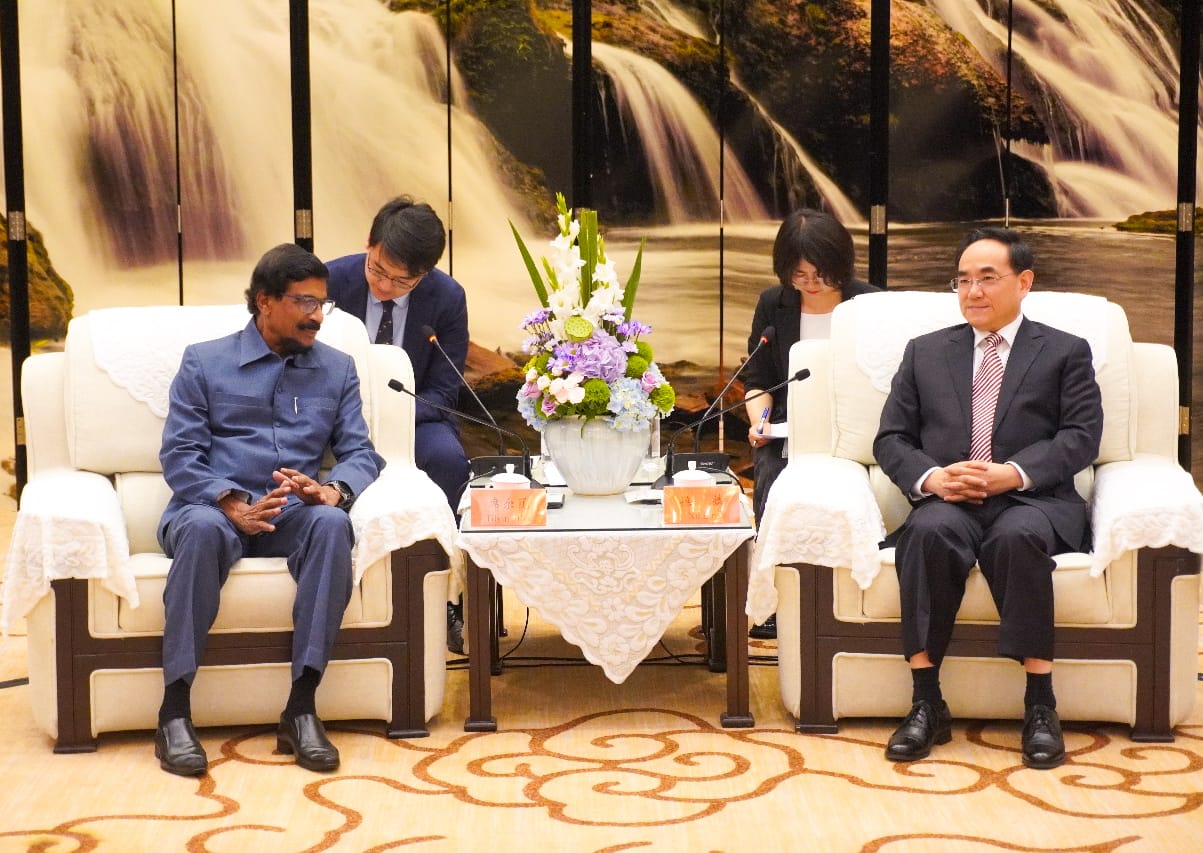
In recent weeks, startling revelations have emerged from Sri Lanka’s political landscape. JVP General Secretary Tilvin Silva openly acknowledged that the Chinese Communist Party (CPC) has advised the National People’s Power (NPP) to remain in power for at least 15 to 20 years if it wishes to deliver “real change” in the country. Speaking at a public meeting, Silva went even further, suggesting that Sri Lanka, like China, would require uninterrupted single- party dominance for decades to achieve progress. This position, echoed in several Sri Lankan media outlets, has ignited heated debate. While NPP leaders present this as pragmatic political advice, critics warn it represents the creeping importation of China’s authoritarian governance model into Sri Lanka’s democratic space.
China’s ‘Alternative’ Governance: A Closer Look
China’s one-party system, under the absolute control of the Communist Party, is often portrayed by Beijing as efficient, stable, and conducive to long-term development. Officials argue that centralized power ensures consistency and avoids the “gridlock” of multi-party democracy. Yet behind this façade lies a far darker reality.
International watchdogs such as Freedom House rate China at only 9/100 for political freedoms, classifying it among the most repressive regimes in the world. Human Rights Watch and Amnesty International have documented sweeping censorship, arbitrary arrests, and the crushing of dissent. Minorities, particularly Uyghur Muslims in Xinjiang, have faced mass detention, forced labor, and cultural erasure — abuses that the U.S. State Department and the United Nations have described as crimes against humanity. In Tibet, cultural suppression, mass relocations, and restrictions on religious practice continue unabated. Even Hong Kong, once promised autonomy, has seen democracy dismantled under Beijing’s sweeping national security law.
Beyond human rights, China’s one-party state has inflicted devastating environmental costs. Its coal-heavy development has made it the world’s largest emitter of greenhouse gases. Studies show that over 80% of Chinese cities still fail to meet national air-quality standards, and large-scale industrial accidents remain routine. Corruption, too, thrives in the absence of checks and balances. Even Xi Jinping’s high-profile anti-corruption campaign has often appeared more like a purge of rivals than a genuine reform.
The Myth of Growth Through Autocracy
The most troubling misconception exported by Beijing is that China’s economic success stems from its political system. In reality, China’s rapid growth began with its integration into global markets after 1978. Foreign investment, technology transfers, and offshored
manufacturing powered the “China miracle.” By 2000, nearly half of China’s exports and imports came from foreign-funded enterprises. As economists such as Nicholas Lardy have argued, it was globalization — not one-party repression — that lifted millions from poverty.
Thus, China’s autocratic model has not been the engine of growth but rather the framework enabling systemic rights abuses, corruption, and environmental degradation.
Sri Lanka’s Crossroads: Which Path Will NPP Choose?
The question now facing Sri Lanka is sobering: does the JVP/NPP wish to emulate this authoritarian template? Tilvin Silva’s comments suggest a worrying openness to a Chinese- style model of prolonged, unchecked rule. If taken seriously, this would mean dismantling the very democratic safeguards that protect Sri Lanka’s pluralism and political freedoms.
Already, concerns are being raised about recent NPP decisions. Moves to centralize economic decision-making, weaken independent commissions, and dismiss dissenting voices in policy debates hint at an intolerance of pluralism. If these are early indicators of a longer strategy, Sri Lanka risks sliding towards a system where power is entrenched in the hands of one party, with little space for dissent.
Do the JVP and NPP truly believe that Sri Lanka’s diverse, multi-ethnic society can withstand the strains of a repressive, one-party framework? Are they prepared to sacrifice democratic freedoms in pursuit of a questionable promise of “efficiency”? And most importantly, do they want to replicate a system that has trampled human rights, suffocated minorities, and inflicted irreversible damage on both people and planet?
Sri Lanka’s future depends not on borrowing authoritarian formulas from abroad but on strengthening its own democratic fabric, ensuring accountability, and embracing an inclusive path to development. To walk the Chinese road is to risk losing the very freedoms that make change meaningful.